On discovering Pink Floyd
I am just about old enough to remember when Another Brick in the Wall (Part II) was number one in the UK charts in December 1979. I did not really understand it then, but I loved the children singing the chorus. We were living in Germany and the Cold War was at its height. One night, one of the airmen my dad worked with came to babysit while my parents went out. He brought along a vinyl copy of The Wall and played it for me.
With the tension of the Cold War in the background and its themes of fear and conflict, it was a fascinating and haunting introduction to Pink Floyd. The line from Mother of “Mother, do you think they’ll drop the bomb?” has stayed with me ever since. Thankfully they haven't yet.
That was my first brush with the band. Even though I could not make sense of it, there was something vast and important in the sound. My parents must have borrowed the record because they made a cassette of the double album. In typical early eighties fashion it was incomplete. They recorded only the tracks they liked or had space for, so for years my version of The Wall was a strange, half-finished thing, a creative collage assembled by accident.
A few years later, when I was about fourteen, I rediscovered them properly and learned there were many more songs on The Wall than I had ever heard. I cannot remember what set it off, perhaps a late-night radio show or the sight of one of those moody album covers in a record shop. Suddenly I was obsessed. Oddly, it was not Dark Side of the Moon or Wish You Were Here that hooked me. It was The Final Cut.
Poetry and protest
That album was my entry point into what I still think is Roger Waters’ greatest gift, his command of language. He must be counted among the best British poets of the last century. The Final Cut is not easy listening. It is bleak, intimate and sometimes uncomfortably personal. Yet it has a truth that drew me in. It sounded like someone dissecting their country, their grief and their own heart without flinching.
For my English GCSE coursework that year, I wrote a short play inspired by The Gunner’s Dream. I had no idea if my teacher knew the song, but he had been open-minded enough to have us study She’s Leaving Home by The Beatles and Father and Son by Cat Stevens, so I thought he would understand. A few of us performed it in the school chapel one busy morning. I wanted to capture the spirit of a man dying in war and imagining the peaceful world that might follow. It was not about the music for me. It was about the words, their mix of poetry, politics and raw emotion. That was the moment I realised language could paint pictures, build worlds and move people in the same way music could.
Floating down, through the clouds
Memories come rushing up to meet me now
But in the space between the heavens
And the corner of some foreign field
I had a dream
I had a dream
In the play I tried to echo the song’s quiet drift into memory and its final wish for a world free of fear, a voice rising from the chaos of war to picture something gentler. Even now I can still hear that moment in my head, half dream and half lament.
Soon after came my discovery of Animals, that snarling, cynical, brilliantly angry record. Where The Final Cut mourned, Animals raged. It was my first encounter with satire that truly bit. The metaphors were so sharp you could almost feel them. The dogs, pigs and sheep stood in for the classes of society, for hypocrisy and greed. For a teenager trying to make sense of adults, it was strangely clarifying. And it connected perfectly with Animal Farm, which we were studying at school.
Listening to Animals made me see how art could hold up a mirror to the world without preaching. It could use sound, story and irony to make you question what you took for granted. It was creative dissent, wrapped in melody.
The visual imagination
It was not only the words that fascinated me. The visual world of Pink Floyd was equally powerful. The prism on Dark Side of the Moon, the inflatable pig from Animals, the surreal live staging of The Wall — all of it spoke to a band that understood how image and sound could work together to tell a bigger story. Even as a teenager, I could feel how much thought had gone into every detail, every projection, every piece of cover art. It made me realise that creativity is not confined to one medium. It is about the conversation between them.
Years later, I had the privilege of seeing both sides of that creative force live. David Gilmour in 2005, Roger Waters in 2007 and again in 2018. Each was remarkable in its own way. Gilmour’s show shimmered with grace and musicianship, while Waters’ productions felt like total theatre — music, film, light and design woven into something immense and emotional. Together they showed the full spectrum of what Pink Floyd had always been about: precision, passion and imagination in perfect balance.
Green is the colour
When my wife and I married, one of our songs in the ceremony was a quiet track from their early days called Green Is the Colour. It is a gentle piece from the More soundtrack, written before the fame and fury, when the band were still finding their sound. There is something disarmingly pure about it, a glimpse of warmth beneath all the later cynicism. Choosing it for our wedding felt like a nod to that early innocence, to the part of Pink Floyd that believed in love and simplicity before the world became too loud.
The lasting echo
What I have always admired about Roger Waters’ writing is the humanity that runs beneath the rage. Even when he is at his most bitter, you can sense the longing for truth, peace and connection. That combination of fury and tenderness is what keeps those records alive.
Animals and The Final Cut taught me that creativity is not just about beauty. It can confront and question, challenge and heal. Waters never softened the edges, yet his words made space for compassion. They demanded that you think as much as you feel.
Without him, Pink Floyd lost that tension between intellect and emotion. For me, The Final Cut and Animals remain the heart of their story, one mournful and one merciless, both unmistakably human. They remind you that the world can break your heart, but it is still worth trying to make sense of it. And perhaps that is what true creativity does, it makes sense of the noise.
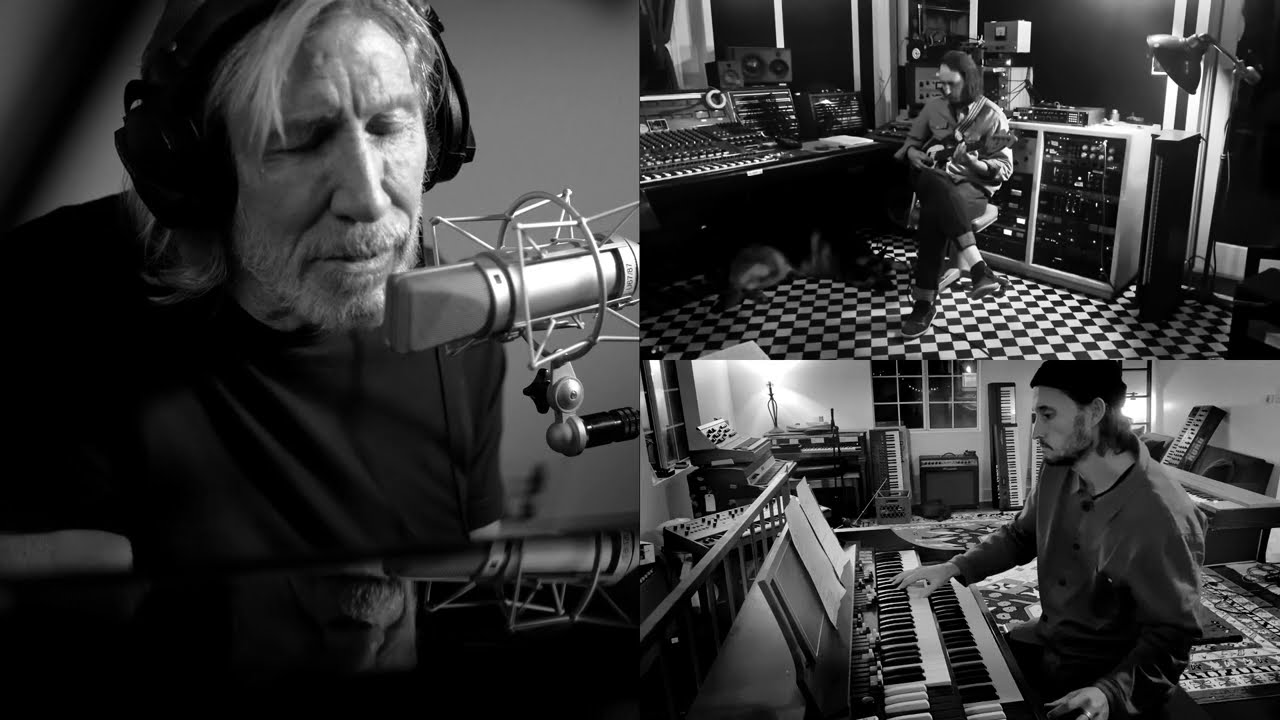
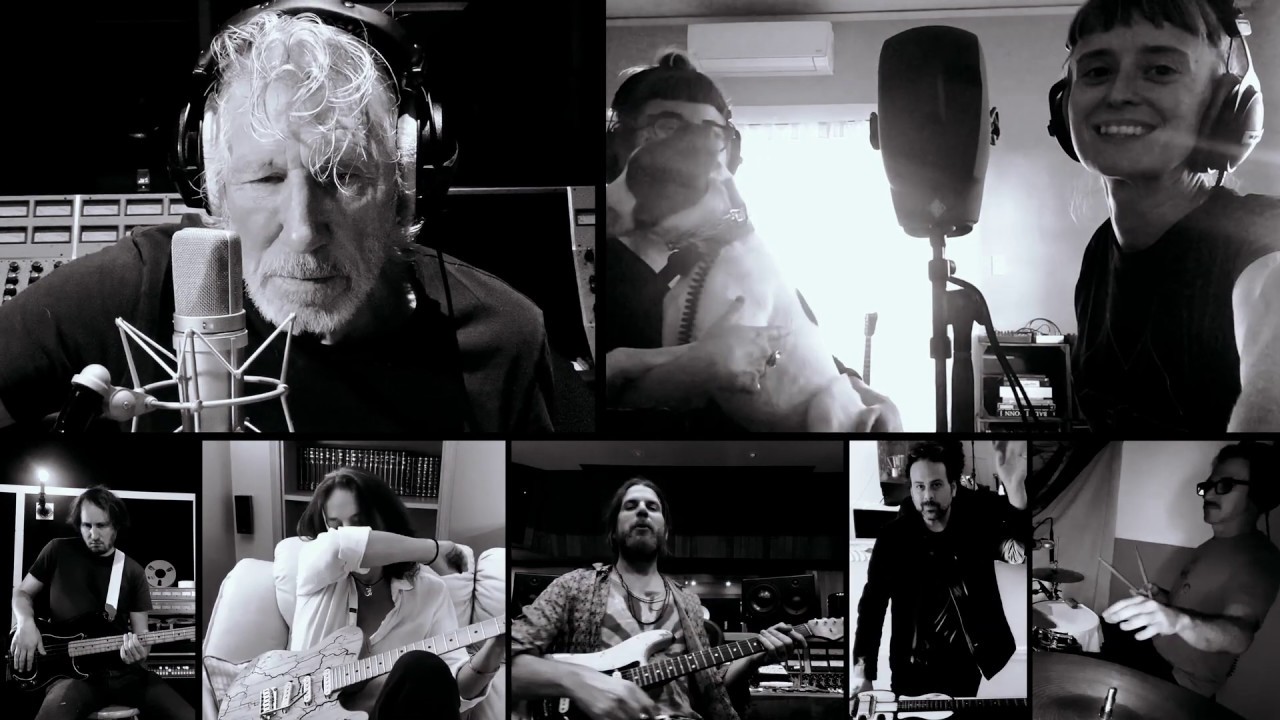
During the pandemic in 2020, it all came full circle with the stunning lockdown sessions. Hearing those stripped-back performances made me cry. There was such tenderness in them, a release from all the fear and tension we were living through and clearly showed that only music can reach across distance, fear and time, and connect us when we need it most.